The Ultimate Guide to AI for Content Creators: Elevating YouTube, TikTok, and Podcasts

Software Engineer
- #ai-for-content-creators
- #content-creation
- #ai-tools
- #youtube-marketing
- #tiktok-marketing
- #podcasting
- #video-editing
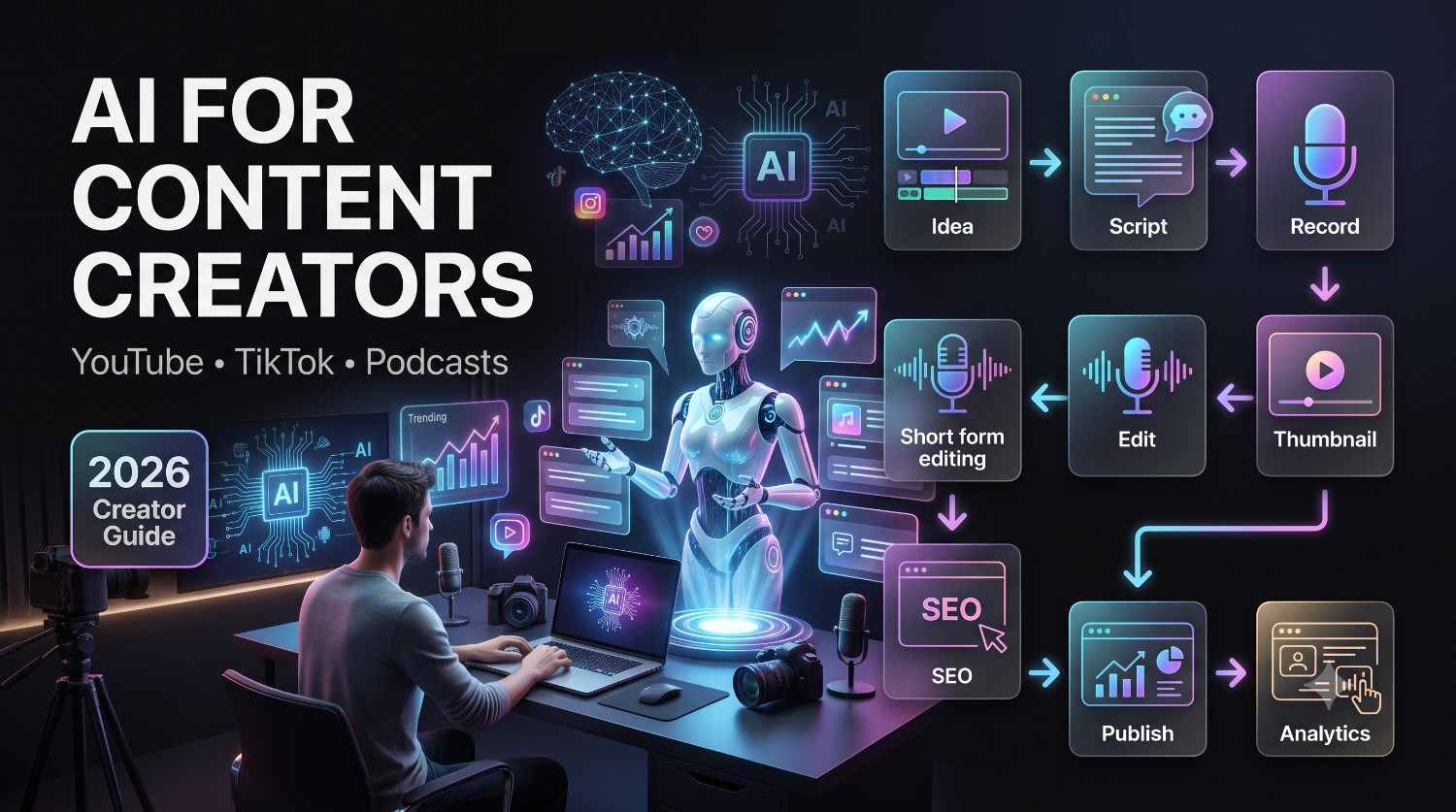
Discover how artificial intelligence is transforming the creative landscape. Learn the best AI tools, strategies, and workflows to scale your YouTube, TikTok, and podcasting channels while maintaining your unique artistic voice.
The Ultimate Guide to AI for Content Creators: Revolutionizing Modern Media Workflows
The digital creator economy is undergoing a massive structural shift. With millions of hours of video and audio uploaded daily across platforms like YouTube, TikTok, and Spotify, standing out requires more than just raw talent—it requires operational efficiency. AI for content creators has emerged not as a replacement for human creativity, but as the ultimate co-creator. By automating tedious editing tasks, generating optimized metadata, and streamlining brainstorming sessions, artificial intelligence allows creators to focus on what they do best: storytelling.
AI for content creators represents the strategic integration of artificial intelligence technologies—such as machine learning, natural language processing (NLP), and neural audio processing—to automate, optimize, and scale digital media production. By streamlining workflows from ideation to distribution, these tools enable creators to drastically increase their output without sacrificing creative quality.
Whether you are an established YouTuber, an aspiring TikTok creator, or a dedicated podcaster, integrating AI into your workflow can save you dozens of hours each week. According to recent industry reports McKinsey [1], generative AI has the potential to automate up to 60-70% of the tasks that currently absorb employees' time, a trend that is rapidly expanding into the creative sectors. In this comprehensive guide, we will explore how AI is revolutionizing each of these platforms and how you can leverage these technologies to scale your channel.
1. AI for YouTubers: Scripting, Editing, and Thumbnail Mastery
AI tools for YouTube optimize the entire video production pipeline by leveraging large language models (LLMs) for script generation, text-based video editors for automated cutting, and neural networks to predict viewer click-through rates (CTR) on custom-generated thumbnails.
YouTube is a highly competitive, multi-faceted platform. Creators must act as directors, writers, actors, editors, and search engine optimization (SEO) specialists simultaneously. AI tools are making these complex, multi-layered roles significantly easier to manage.
Pre-Production: Brainstorming, Prompt Engineering, and Scripting
Staring at a blank page is one of the hardest parts of content creation. AI writing assistants like ChatGPT and Claude can act as collaborative brainstorming partners. You can use these advanced language models to:
Generate high-click-through-rate (CTR) video ideas based on current search trends and specific audience demographics.
Draft detailed video outlines or write full, engaging scripts tailored to your specific brand voice and audience persona.
Optimize the hook of your video (the critical first 15 seconds) to maximize viewer retention and satisfy the YouTube algorithm.
For example, a prompt as simple as "Act as an expert YouTube scriptwriter. Write a highly engaging 15-second hook for a video titled 'The Future of AI for Content Creators', targeting tech-savvy Gen Z viewers" can yield dozens of high-performing variations in seconds.
Production and Post-Production: Intelligent Video Editing
Video editing is notoriously time-consuming, often taking up to 5 to 10 hours of editing for every single minute of finished video. AI-driven video editors like Descript and Runway Gen-2 are fundamentally changing this dynamic.
With text-based editing (such as in Descript), you can edit your video by simply editing the transcribed text document. If you delete a sentence from the text, the software automatically cuts that segment from the video timeline. Additionally, modern AI tools can:
Automatically remove silences, filler words (like "ums" and "ahs"), and repetitive takes with a single click.
Color grade raw footage automatically to match a specific cinematic aesthetic using predictive color-mapping algorithms.
Generate realistic, context-aware B-roll footage or visual assets directly from text prompts using advanced generative video models.
Distribution: AI SEO and Thumbnails
An amazing video is useless if no one clicks on it. AI platforms like TubeBuddy and VidIQ use predictive algorithms to analyze search volume and competition, helping you select the perfect semantic keywords and tags.
For visual appeal, generative AI image models like Midjourney can be used to design highly eye-catching, custom graphics for your thumbnails. These designs can then be optimized using predictive heat-map analysis tools to predict exactly where viewers will look first, maximizing your competitive edge on the homepage feed.
2. AI for TikTok & Short-Form Creators: Going Viral at Scale
Short-form AI tools maximize audience reach by automatically repurposing long-form horizontal videos into viral-ready, vertical (9:16) clips. These tools use facial tracking and sentiment analysis to identify key moments and overlay dynamic, engaging captions.
Short-form video platforms like TikTok, Instagram Reels, and YouTube Shorts require high-volume, high-energy content. In this ecosystem, speed, volume, and rapid trend capitalization are essential for algorithmic success. AI plays a vital role in keeping up with this fast-paced environment.
Repurposing Long-Form into Short-Form
One of the most efficient workflows for modern creators is turning one long-form YouTube video or podcast into ten short-form TikToks. AI tools like Opus Clip, Munch, and Klap analyze long-form videos, identify the most engaging or funny moments using facial recognition and vocal tone sentiment analysis, and automatically crop them into 9:16 vertical videos.
According to social media statistics Search Engine Land [2], multi-platform short-form content increases organic reach by up to 135% compared to single-platform publishing. These tools even auto-generate dynamic, colorful, and highly synchronized captions that keep viewers hooked throughout the entire video loop.
Automated Captions and Interactive Effects
Since a vast majority of mobile users watch short-form videos on mute, captions are absolutely non-negotiable. AI-driven captioning tools accurately transcribe speech in real-time, matching the precise rhythm of the speaker and applying stylized animations. Furthermore, TikTok’s native AI filters and text-to-speech voices allow creators to quickly hop on viral trends without needing complex studio setups or advanced software.
3. AI for Podcasters: Pristine Audio and Seamless Show Notes
AI for podcasters automates audio post-production by removing background noise, leveling audio, and converting long transcripts into structured show notes, clickable timestamps, and promotional blog articles in minutes.
Podcasting is an incredibly intimate medium, but it suffers from high production friction. Modern listeners expect pristine, radio-grade audio quality, which historically required thousands of dollars in professional acoustic treatment and studio gear. AI has democratized this process entirely.
Acoustic Enhancement and Deep Learning Noise Removal
Tools like Adobe Podcast (specifically its advanced "Enhance Speech" feature) and Auphonic use deep learning neural networks to analyze audio waveforms, remove background noise, room echo, and harsh plosives, and restore vocal frequencies. This means a podcast recorded on a budget USB microphone in a noisy bedroom can be processed to sound like it was recorded in a professional soundproof broadcast studio.
Semantic Post-Production: Automated Transcriptions and Show Notes
Writing detailed show notes, interactive timestamps, and promotional newsletters for every episode is a time-consuming chore. AI transcription services like Otter.ai and Whisper by OpenAI generate near-perfect transcripts in minutes. You can feed these raw transcripts into large language models to instantly generate:
Structured show notes outlining key topics and central themes.
Accurate, clickable timestamps for easy user navigation across audio players and YouTube.
Engaging social media promotional posts, quote blocks, and promotional email newsletters.
A Comparison of Top AI Tools for Content Creators
To help you decide which tools to integrate into your production pipeline, review this comparison matrix of the leading AI platforms for modern creators:
Tool Name Primary Category Key Feature Best Suited For Descript Video/Audio Editing Text-based editing of video timeline via transcripts Youtubers, Podcasters Opus Clip Short-Form Repurposing AI-driven 9:16 cropping and auto-captioning TikTok, Instagram Reels, YouTube Shorts Adobe Podcast Audio Engineering Speech enhancement and room echo removal Podcasters, Voiceover Artists Midjourney Generative Art High-quality image generation from text prompts Thumbnail Designers, Blog Illustrators Claude / ChatGPT Ideation & Scripting Advanced natural language processing and drafting All Creators (Scripts, Copy, Metadata)
4. Balancing AI Efficiency with Human Authenticity
To maintain audience trust and build a sustainable brand, creators must use AI as a foundational draft rather than a final product. Infusing personal anecdotes, unique perspectives, and strict fact-checking prevents content from feeling robotic or generic.
While AI offers incredible scale and efficiency, the most successful content creators are those who maintain a deeply authentic relationship with their audience. Viewers ultimately subscribe to people, not automated algorithms. To ensure you maintain your unique edge, follow these operational best practices:
Use AI as a draft, not the final product:
Never copy-paste AI script generation directly. Infuse your personal anecdotes, humor, and unique perspective into every line. Your voice is your brand; keep it distinct.
Rigorous Fact-Checking:
AI language models can hallucinate or state incorrect facts with absolute confidence. Always verify facts, historical dates, statistics, and references before publishing your content to maintain your authority.
Maintain Creative Control:
Let AI handle the tedious, repetitive tasks (like transcription, noise removal, and basic footage cutting) so you can spend your valuable cognitive energy on creative direction, high-level strategy, and community engagement.
Conclusion
The integration of AI for content creators is not a passing trend; it is the new operational standard. By adopting these powerful tools today, you can dramatically increase your content output, improve overall production value, and free up time to focus on strategic growth and monetization. Embrace artificial intelligence as your ultimate digital assistant, optimize your workflows, and watch your channels thrive in this exciting new creative landscape.