Artificial Intelligence News: Latest AI Breakthroughs, Tools & Technology Updates (2026)

Software Engineer
- #Artificial Intelligence
Explore the most groundbreaking artificial intelligence updates of 2026. From autonomous agentic swarms and quantum neural networks to the latest tools like GPT-6 and Claude 5, discover how the AI landscape has completely transformed.
Artificial Intelligence News: Latest AI Breakthroughs, Tools & Technology Updates (2026)
Introduction: The Age of Actionable Artificial Intelligence
The year 2026 marks a historic epoch in the global evolution of artificial intelligence. We have officially transitioned from the era of "Generative AI"—where models primarily predicted text and generated static imagery—to the era of Agentic and Actionable AI. In this definitive edition of our Artificial Intelligence News: Latest AI Breakthroughs, Tools & Technology Updates (2026), we analyze how modern cognitive systems no longer merely answer queries. Instead, they plan, execute, collaborate, and self-correct across complex, multi-step workflows without human intervention. This comprehensive analysis covers the technological milestones, advanced developer frameworks, and infrastructural paradigm shifts driving the industry forward.
1. The Rise of Autonomous Agentic Swarms
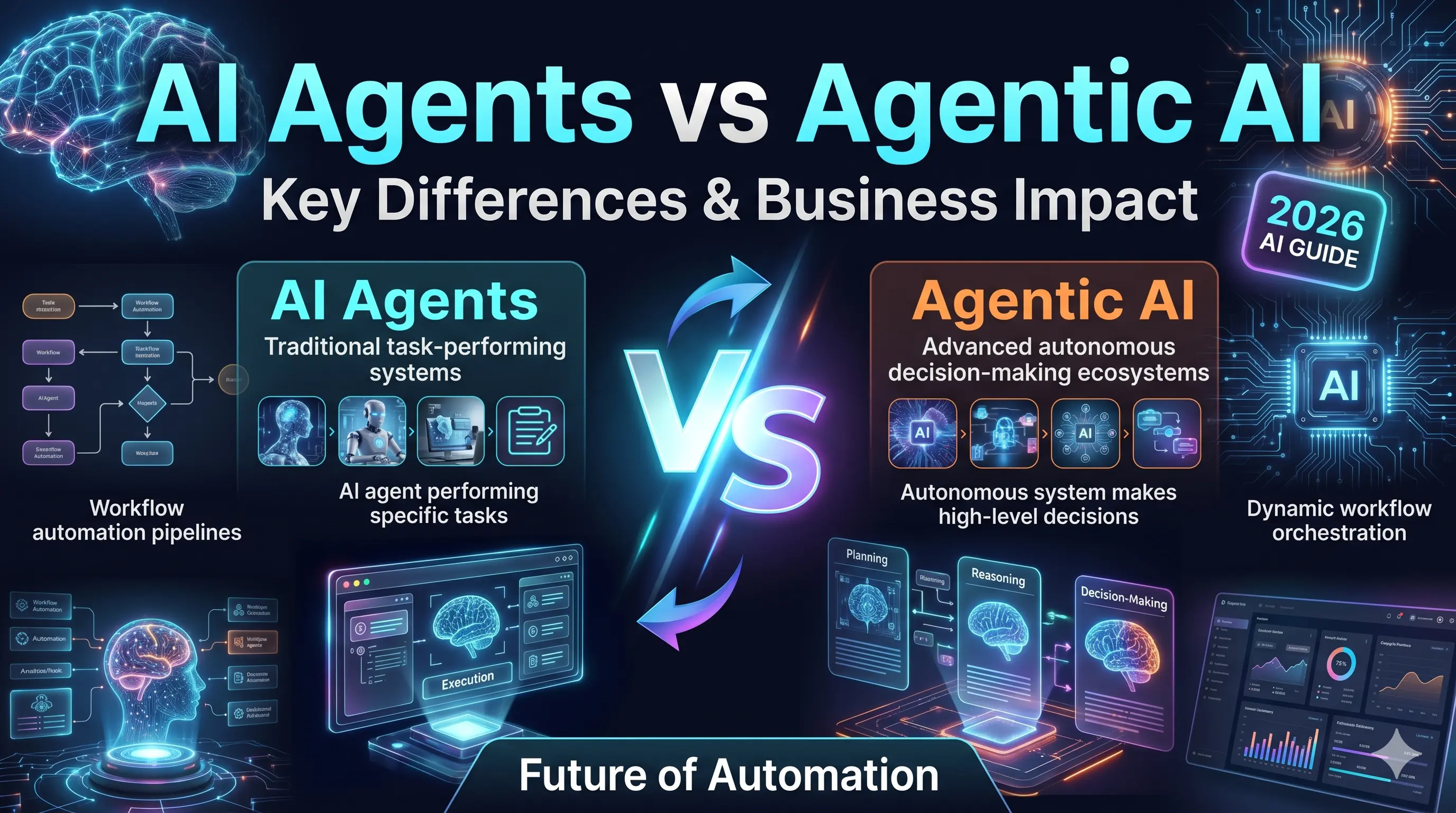
What is an autonomous agentic swarm? An autonomous agentic swarm is a decentralized network of specialized AI agents working collaboratively to solve complex, multi-step tasks. Instead of relying on a single monolithic model, these systems distribute workloads across specialized agents that communicate via high-speed, localized protocols to maximize efficiency, reduce execution errors, and automate entire business workflows.
The dominant technological breakthrough of 2026 is the maturity of Autonomous Agent Swarms. Rather than relying on a single monolithic large language model (LLM), modern enterprise environments deploy networks of specialized AI agents. These agents communicate via high-speed, localized protocols to solve complex operational challenges.
According to recent industry benchmarks published in Nature [1], agentic swarms have reduced operational costs for software deployment and logistics planning by up to 60%. These systems leverage advanced orchestration frameworks, allowing an 'architect agent' to break down a high-level goal, delegate sub-tasks to 'specialist agents' (such as coding, security auditing, and UX testing agents), and synthesize the final output with minimal human supervision.
Key Features of 2026 Agentic Systems:
-
Long-Term Ephemeral Memory: Agents utilize vector-based state-tracking databases that allow them to preserve critical context across months of intermittent operations.
-
Self-Healing Protocols: When an agent encounters an execution error, it automatically spawns a debugger agent to patch its own code or logic path in real-time.
-
Cross-Platform Interoperability: Standardized APIs allow proprietary models from OpenAI, Anthropic, and Google to collaborate seamlessly within the same unified workflow.
How Agentic Swarms Solve Problems (Step-by-Step)
In practice, the execution of a multi-agent workflow follows a highly structured, logical sequence:
-
Deconstruction: The Coordinator Agent receives a complex prompt and parses it into distinct, atomic sub-tasks.
-
Allocation: Sub-tasks are dynamically assigned to specialized agents based on their fine-tuned cognitive profiles (e.g., data analysis, mathematical verification, semantic formatting).
-
Execution & Debugging: Agents execute tasks in parallel. If an execution branch fails, local self-healing protocols compile error logs and re-route the logic path.
-
Synthesis: The Coordinator collects all outputs, runs a secondary verification step, and compiles a comprehensive final deliverable.
2. Cutting-Edge AI Tools Dominating 2026
Which AI tools dominate the industry in 2026? The leading artificial intelligence tools of 2026 are GPT-6 Ultra, Claude 5 Opus, Llama 4, and Morphon-3D. These platforms focus on real-time multimodal reasoning, formal mathematical verification, open-source edge optimization, and generative physical asset design to automate advanced cognitive and industrial workflows.
The software landscape has shifted dramatically, with legacy tools being replaced by AI-native platforms designed for deep cognitive tasks. Here are the leading tools defining the industry this year:
Tool / Model Primary Paradigm Core Breakthrough GPT-6 Ultra Multimodal Reasoning Real-time video/audio logic processing with sub-50ms latency. Claude 5 Opus Mathematical & Code Synthesis Formal mathematical verification of generated code bases. Llama 4 (405B Open) Open-Source Decentralization Fully-democratized high-parameter model optimized for edge computing. Morphon-3D Generative Physical Asset Design Generates CAD-ready 3D models with integrated structural stress analysis.
To keep up with these tools, modern developers are shifting their workflows from manual coding to system orchestration.
3. Code Blueprint: Implementing a Multi-Agent Swarm
How do you program a multi-agent swarm in 2026? Programming a multi-agent swarm involves initializing an OrchestrationHub, registering specialized cognitive agents with unique parameters, defining a structured task payload, and calling dispatch_workflow to execute the operations autonomously.
To illustrate how these agentic systems operate in practice, here is a Python blueprint using the standardized 2026 swarm-orchestrator library. This code demonstrates how a developer initializes a Coordinator Agent that delegates tasks to a specialized Data Analyst Agent and an Audit Agent.
  import swarm_orchestrator as swarm
from swarm_orchestrator.agents import ConversationalAgent, AnalyticalAgent

# Initialize the orchestration hub
hub = swarm.OrchestrationHub(api_key="secure-2026-token")

# Define specialist agents with distinct cognitive profiles
analyst = AnalyticalAgent(
    name="DataAnalyst-01",
    model="gpt-6-mini",
    temperature=0.1,
    specialty="financial_forecasting"
)

auditor = ConversationalAgent(
    name="ComplianceAuditor-01",
    model="claude-5-sonnet",
    temperature=0.0,
    specialty="regulatory_compliance"
)

# Register agents with the hub
hub.register_agent(analyst)
hub.register_agent(auditor)

# Define a multi-step task payload
task_payload = {
    "objective": "Analyze Q1 2026 market volatility and verify compliance with SEC guidelines.",
    "data_source": "s3://market-data-2026/q1_raw.json",
    "workflow_steps": ["analyze", "audit_compliance", "compile_report"]
}

# Execute the workflow autonomously
execution_result = hub.dispatch_workflow(task_payload)
print(f"Workflow Status: {execution_result.status}")
print(f"Final Consolidated Report: {execution_result.get_summary()}")
Code Architecture Breakdown
Let's analyze the core architectural components of this 2026 implementation:
-
OrchestrationHub: The central nervous system of the swarm. It manages secure API handshakes, monitors state-tracking databases, and routes execution tokens between registered agents. -
Specialized Cognitive Profiles: By declaring
AnalyticalAgentandConversationalAgent, we assign different cognitive frameworks. The analyst uses a low-temperature setting (0.1) for deterministic mathematical accuracy, while the auditor enforces regulatory protocols based on semantic rule matching. -
dispatch_workflow: This single method executes the entire pipeline. Behind the scenes, the hub handles step sequencing, error catching, and consensus verification without hardcoded control loops.
4. Quantum Machine Learning (QML) Breakthroughs
What is Quantum Machine Learning (QML)? Quantum Machine Learning (QML) is an advanced scientific field that integrates quantum computing processors with neural network architectures. It enables the processing of high-dimensional optimization problems and complex physical simulations that are computationally impossible for classical hardware.
Another major technological milestone of 2026 is the integration of quantum computing processors with neural network architectures, commonly referred to as Quantum Machine Learning (QML). Tech conglomerates have successfully trained hybrid classical-quantum models that utilize superconducting qubits to accelerate high-dimensional optimization tasks [2].
This is particularly revolutionary for molecular discovery and climate modeling. Traditional LLMs struggle with the infinite combinatorial possibilities of molecular bonding. QML models, however, can simulate subatomic states natively, reducing the time required to discover novel pharmaceutical compounds from years to mere hours.
The Real-World Impact of QML
The convergence of quantum computing and neural network design is actively reshaping industries. Key applications include:
-
Advanced Pharmacology: Accelerating drug discovery pathways by simulating complex molecular interactions in a virtual quantum space.
-
Global Supply Chain Optimization: Solving NP-hard traveling salesperson scenarios across thousands of active global nodes simultaneously.
-
Dynamic Climate Projection: Modeling atmospheric chaos variables to accurately project micro-climate changes years in advance.
5. AI Regulations, Ethics, and the Energy Question
How is artificial intelligence regulated in 2026? Modern AI systems are regulated under international frameworks like the EU AI Act 2.0, which require cryptographic signatures for self-improving code, strict audit trails for autonomous decisions, and the transition of high-performance data centers to sustainable, green-energy infrastructure.
As capabilities expand, so do the regulatory and infrastructural guardrails. The global community has enacted the updated EU AI Act 2.0 [3], which mandates strict transparency for any model displaying self-improving properties. Every autonomously generated code deployment must now carry a cryptographic signature verifying that a human in the loop approved its final execution.
Furthermore, the energy footprint of training next-generation models has forced a shift toward green-compute infrastructure. Leading AI data centers in 2026 are natively powered by Small Modular Reactors (SMRs) and advanced geothermal wells, ensuring that the march toward Artificial General Intelligence (AGI) does not compromise global net-zero emissions targets.
Conclusion: Looking Ahead in the Cognitive Era
The landscape of artificial intelligence in 2026 proves that cognitive models are no longer mere utility tools; they are the core foundational infrastructure of the global digital economy. From autonomous agent swarms running operations to hybrid quantum computing processors solving previously impossible challenges, the speed of innovation is exponential. By understanding how to program agentic workflows, leveraging state-of-the-art tools, and navigating the evolving regulatory environment, enterprises and developers can scale their systems to unprecedented heights of capability and efficiency. Stay tuned to our continuous updates as we cover the future of the cognitive revolution.
References & Citations
-
Nature Computational Science. (2026). Orchestrating Autonomous Agent Swarms in Distributed Enterprise Infrastructures. Available at: Nature.
-
IEEE Transactions on Quantum Engineering. (2025). Hybrid Classical-Quantum Architectures for High-Dimensional Neural Optimization.
-
European Commission. (2026). Regulatory Framework for Evolving Algorithmic Systems and Autonomous Agents (EU AI Act 2.0). Available at: European Union Official Portal.